
Cervical Myelopathy
Cervical myelopathy occurs when the spinal cord is compressed in the neck, often from degenerative changes like stenosis, bone spurs, or disc issues. It can affect balance, coordination, and hand function and should be evaluated promptly.
Common Symptoms
- Hand clumsiness (dropping items, difficulty with buttons)
- Balance problems or unsteady walking
- Numbness or tingling in hands or arms
- Weakness in arms or legs
- Changes in coordination or gait
Common Causes
- Cervical stenosis (narrowing of the spinal canal)
- Bone spurs (osteophytes) and arthritis
- Disc bulging or disc herniation
- Thickened ligaments and degenerative changes
- Alignment changes that increase cord pressure
Insurance check, handled.
We’ll verify benefits and walk you through expected coverage before treatment. No surprises.
- Benefit verification before major steps
- Clear next steps + documentation help
- Scheduling support from our team
What Is Cervical Myelopathy?
Cervical myelopathy is dysfunction of the spinal cord caused by compression in the cervical spine (neck). Unlike a “pinched nerve,” which affects a single nerve root, myelopathy involves the spinal cord itself and can impact coordination, balance, and fine motor control.
Symptoms may develop gradually and can include trouble with hand dexterity, changes in walking or balance, weakness, numbness, and in more severe cases, bowel or bladder changes. Because it involves the spinal cord, timely evaluation matters.
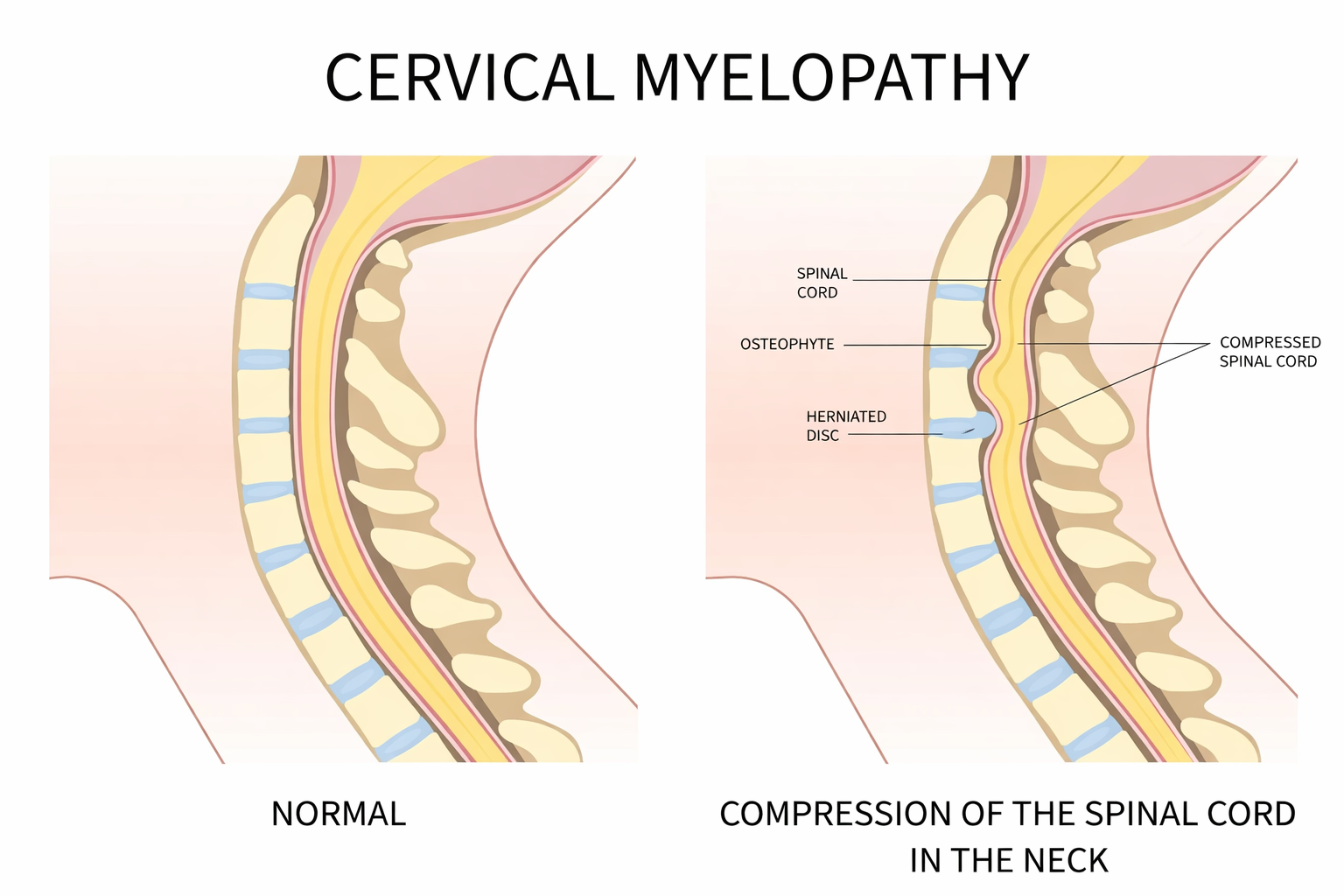
Illustration showing spinal cord compression in the cervical spine.
Why It Happens
Cervical myelopathy is most commonly caused by degenerative changes that narrow the spinal canal and compress the cord, including arthritis, bone spurs, disc bulging/herniation, and thickened ligaments. In some cases, alignment changes can also contribute to cord pressure.
When It Needs Prompt Evaluation
Worsening balance, frequent falls, increasing hand clumsiness, progressive weakness, or new bowel/bladder changes should be evaluated promptly. These can be signs of significant spinal cord involvement.
Symptom Check
This quick guided check helps sort common symptom patterns seen with cervical spinal cord compression. It’s not a diagnosis—if symptoms are concerning, schedule an evaluation.
Cervical Myelopathy Triage
5 questions • takes about 30 seconds
1) Any of these happening recently?
2) Hand function changes?
3) Walking/balance issues?
4) Any arm symptoms that travel from the neck?
5) Is weakness progressing?
Diagnosis
Diagnosis starts with a focused neurological exam. Imaging is used to confirm spinal cord compression and identify the level(s) involved. The goal is to determine severity, stability, and the best treatment path.
Clinical Exam
- Strength, sensation, and reflex testing
- Gait, balance, and coordination evaluation
- Hand dexterity and fine motor assessment
- Signs of spinal cord involvement (upper motor neuron findings)
Imaging
- MRI (best for spinal cord and nerves)
- X-rays (alignment, stability, degeneration)
- CT or CT myelogram (selected cases)
Additional Tests
- EMG/NCS (if differentiating nerve root vs peripheral nerve issues)
- Lab work in select cases to rule out other causes
- Specialist review of imaging and symptoms
Treatment
Treatment depends on symptom severity, neurological findings, and imaging results. Mild cases may start with conservative care, but progressive myelopathy often requires surgical decompression to protect the spinal cord.
Non-Surgical Options
- Activity modification and fall-risk prevention
- Physical therapy focused on balance, posture, and safe strengthening
- Anti-inflammatory medications (NSAIDs) when appropriate
- Short-term oral steroids (selected cases)
- Managing contributing neck pain and stiffness
- Close monitoring for progression
Surgical Options
- Spinal cord decompression procedures (goal: protect the cord)
- Anterior cervical discectomy and fusion (ACDF)
- Laminectomy (posterior decompression)
- Laminoplasty (motion-preserving decompression)
- Decompression with stabilization when indicated
Recovery
Recovery varies based on how long symptoms have been present and how severe the cord compression is. Many patients see improvements in function, but the main goal—especially in moderate to severe cases—is to stop progression.
Conservative Care
- Best for mild, stable symptoms
- Focus on safe mobility and symptom control
- Regular follow-up is important
After Surgery
- Early mobility is encouraged in most cases
- Restrictions depend on procedure type
- Physical therapy may be recommended
Expected Progress
- Balance and hand function may improve over time
- Recovery can continue for months
- Earlier treatment often leads to better outcomes
Prevention
Not all causes are preventable, but good spine habits can reduce neck strain and help minimize symptom flare-ups. If myelopathy is present or suspected, preventing falls and monitoring progression is key.
Daily Habits
- Neutral posture at desk and during phone use
- Micro-breaks from prolonged sitting
- Ergonomic workstation setup
- Fall-risk awareness (especially with balance symptoms)
Strength & Mobility
- Upper back and scapular strengthening
- Gentle mobility and flexibility work
- Low-impact conditioning consistency
- Balance training when appropriate
FAQ
Is cervical myelopathy the same as a pinched nerve?
No. A pinched nerve (radiculopathy) affects a nerve root. Cervical myelopathy involves the spinal cord and can affect balance, coordination, and hand function.
Does cervical myelopathy usually require surgery?
Many cases—especially moderate to severe or progressive symptoms—are treated surgically to decompress the spinal cord and prevent worsening. Mild cases may be monitored closely depending on the clinical situation.
Can cervical myelopathy cause balance problems?
Yes. Spinal cord compression can affect coordination and walking, which is why balance changes and frequent falls should be taken seriously.
What imaging is most useful for cervical myelopathy?
MRI is typically the most useful test because it shows the spinal cord, nerves, discs, and stenosis. X-rays can help assess alignment and stability.
Schedule a consultation
We’ll review symptoms, imaging, and next steps. If this feels urgent, mention worsening balance/coordination or new bowel/bladder changes.
If you have severe or rapidly worsening symptoms, seek urgent evaluation.
What to bring
- Prior MRI/CT reports (if available)
- Medication list
- Timeline of symptoms (what’s changing?)
- Any fall history or balance changes