Minimally Invasive Spine Surgery
Minimally invasive spine surgery (MISS) uses smaller incisions and specialized instruments to relieve nerve pressure and/or stabilize the spine while minimizing muscle disruption. The goal is the right surgery—when surgery is needed—with a smoother recovery when appropriate.
Common Reasons Patients Consider MISS
- Persistent neck or back pain despite treatment
- Radiating arm or leg pain (nerve pain)
- Numbness or tingling
- Weakness or balance issues from compression
Potential Advantages (When Appropriate)
- Smaller incisions
- Less muscle disruption
- Less postoperative pain in many cases
- Faster return to activity for some procedures
Insurance check, handled.
We can verify benefits, coordinate imaging, and walk you through next steps after results.
- Benefit verification before procedures
- Help coordinating MRI/CT orders
- Clear plan after imaging
What Is Minimally Invasive Spine Surgery?
MISS is a set of techniques that allows a surgeon to treat spinal problems through smaller incisions using tubes, microscopes, endoscopes, and/or navigation imaging. Rather than stripping muscle off the spine, muscles are gently separated and protected.
Depending on your diagnosis, the procedure may focus on decompression (relieving pressure on nerves or the spinal cord), stabilization (fusion/fixation), or both. The key is choosing the safest, most effective option for your specific anatomy and symptoms.
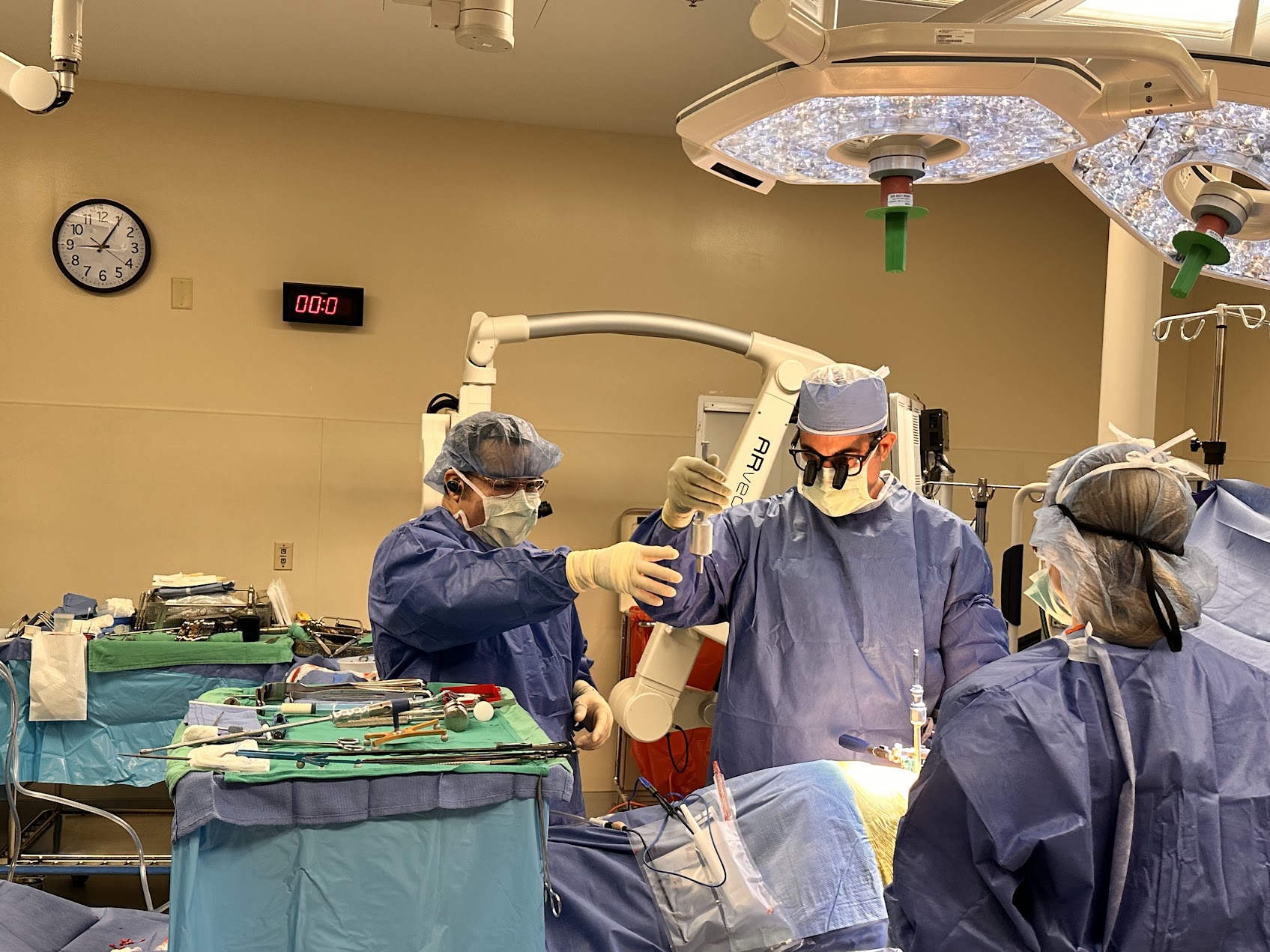
Smaller-incision approach using precision imaging and specialized instruments.
Emergency Check
MISS is typically planned (not emergency surgery). If you have red-flag symptoms, your first step is urgent evaluation. This quick check helps guide urgency. It’s not a diagnosis.
Spine Symptoms Triage
5 questions • flags urgent vs routine evaluation
1) Any new bowel/bladder changes or saddle numbness?
2) Any new or worsening weakness?
3) Any major walking/balance or coordination change?
4) Pain pattern right now?
5) Any fever, cancer history, or recent major injury?
Conditions Treated
MISS can be used for many conditions—depending on severity, levels involved, and whether stability is required.
Nerve Compression
- Herniated disc / radiculopathy
- Spinal stenosis
- Spinal cord compression (selected cases)
Degenerative Conditions
- Degenerative disc disease
- Facet joint syndrome
- Spinal arthritis (spondylosis)
Stability Disorders
- Spondylolisthesis
- Spinal instability
- Selected fractures
How MISS Works
MISS typically uses a small incision and a tubular retractor to create a protected pathway to the spine. A microscope or endoscope helps visualize the target area, and imaging guidance helps confirm levels and instrument position.
Depending on the diagnosis, surgery may remove pressure from nerves/spinal cord (decompression), remove a disc fragment (discectomy), or stabilize the spine (fusion/fixation).
Common Tools / Technology
- Tubular retractors
- Microscope or endoscope
- Fluoroscopy / navigation imaging
- Specialized minimally invasive instruments
Procedure Types
Minimally Invasive Discectomy
Removes disc material compressing a nerve root to reduce radiating arm/leg pain.
Minimally Invasive Decompression
Relieves narrowing (stenosis) by creating space for nerves and/or the spinal cord.
Minimally Invasive Fusion
Stabilizes a painful or unstable segment using small-incision techniques when appropriate.
Am I a Candidate?
You May Be a Candidate If
- Symptoms persist despite conservative care (PT, meds, injections when appropriate)
- Imaging matches symptoms (disc, stenosis, nerve/spinal cord compression)
- There is a clear surgical target and a stable plan
MISS May Not Be Ideal If
- Complex multi-level deformity or severe scoliosis
- Instability pattern that needs a broader exposure
- Medical factors that change risk/benefit
Recovery
Early Recovery
- Walking often begins quickly (procedure-dependent)
- Pain control plan + wound care instructions
- Restrictions vary by surgery type
Rehabilitation
- PT may be recommended
- Gradual activity progression
- Focus on safe mechanics + strength
Return to Activity
- Timeline depends on decompression vs fusion
- Goal: safe return to function, not rushed
- Long-term plan to reduce recurrence risk
Risks and Considerations
General Surgical Risks
- Infection
- Bleeding
- Anesthesia complications
Spine-Specific Risks
- Nerve injury (rare but possible)
- Persistent symptoms / incomplete relief
- Need for additional treatment or surgery
FAQ
Is minimally invasive spine surgery “better”?
Not automatically. It can reduce tissue disruption in many cases, but the best approach is the one that safely treats your diagnosis.
How long does surgery take?
Many procedures are 1–3 hours, depending on levels and complexity.
Will I need physical therapy?
Many patients benefit from PT to restore strength, mobility, and mechanics—especially after symptoms have limited activity.
Does MISS mean no fusion?
No. MISS is an approach. Some cases are decompression-only, while others require stabilization/fusion for long-term safety.
Schedule a consultation
We’ll review symptoms and imaging and coordinate the safest next step.
If you have worsening weakness, trouble walking, or bowel/bladder changes, seek urgent evaluation.
What to bring
- MRI/CT/X-ray reports and image discs/links
- Medication list
- Timeline of symptoms
- Prior treatments tried (PT, injections, meds)