
Robotic Spine Surgery
Robotic spine surgery uses advanced computer-guided navigation and robotic assistance to improve surgical precision, enhance safety, and optimize spinal implant placement during complex spine procedures.
Conditions Often Treated
- Spinal instability
- Degenerative disc disease
- Spondylolisthesis
- Complex spinal deformities
Technology Advantages
- Enhanced surgical precision
- Improved implant accuracy
- Reduced radiation exposure (selected cases)
- Minimally invasive compatibility
What Is Robotic Spine Surgery?
Robotic spine surgery combines advanced imaging technology, computer navigation, and robotic assistance to help surgeons perform complex spinal procedures with increased accuracy and consistency.
The robotic system supports surgical planning and guides instrument placement during procedures such as spinal fusion and instrumentation placement.
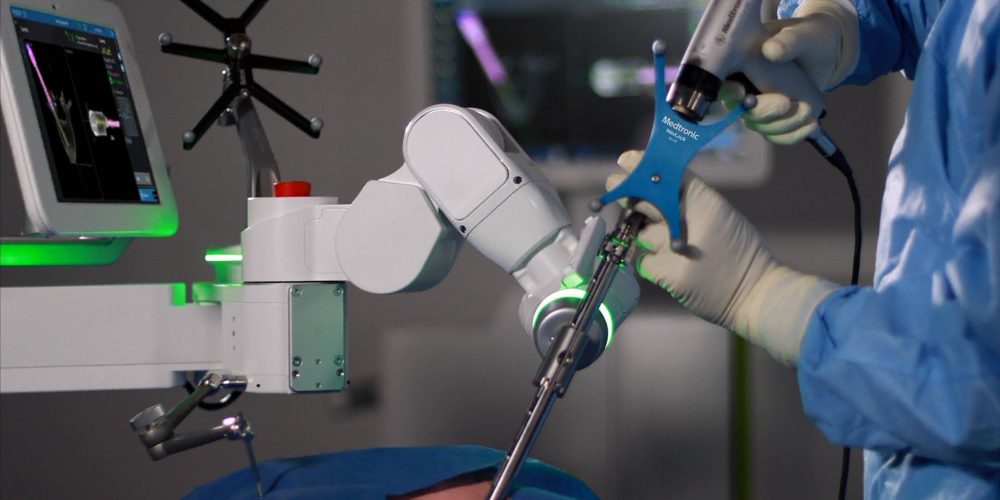
Robotic spine surgery technology courtesy of Medtronic, a partner of Dr. Yasmeh.
How Robotic Spine Surgery Works
Robotic spine surgery begins with detailed imaging and surgical planning. Specialized software helps map spinal anatomy and plan implant placement for alignment and stability.
During surgery, robotic guidance helps the surgeon follow the pre-planned pathway and place instrumentation with precision. The robot assists — the surgeon remains in full control throughout the procedure.
Technology Components
- 3D spinal imaging
- Computer surgical planning
- Real-time navigation guidance
- Robotic arm precision control
Robotic vs Traditional Spine Surgery
Both robotic-assisted and traditional spine surgery can be effective. The difference is how the surgeon plans and executes implant placement and surgical navigation. Robotic guidance can add an extra layer of precision for selected cases.
Robotic-Assisted Surgery
- Planning: pre-op or intra-op 3D planning mapped to your anatomy
- Guidance: robotic navigation helps follow a planned trajectory
- Placement: enhanced implant placement consistency (selected cases)
- Approach: often pairs well with minimally invasive techniques
- Goal: precision + repeatability for complex anatomy
Traditional Surgery
- Planning: surgeon planning using standard imaging and intra-op assessment
- Guidance: direct visualization and/or navigation tools depending on case
- Placement: depends heavily on anatomy, exposure, and surgical visibility
- Approach: can be open or minimally invasive depending on diagnosis
- Goal: proven surgical methods tailored to the condition
Surgeon Expertise Matters
Robotic technology is only as good as the plan behind it. The surgeon’s experience in diagnosing the true pain source, selecting the right procedure, and executing the plan safely is what drives outcomes.
What You Want in a Robotic Spine Surgeon
- Experience treating complex spine conditions
- Strong decision-making on when robotic guidance is appropriate
- Ability to perform minimally invasive approaches when indicated
- Clear pre-op planning and patient-specific strategy
- Structured recovery planning and follow-up care
Dr. Yasmeh’s Approach
- Focus on precision, stability, and nerve protection
- Patient-specific planning based on symptoms + imaging
- Minimally invasive options when clinically appropriate
- Clear expectations on recovery and return to activity
- Technology used strategically — not automatically
Benefits of Robotic Spine Surgery
Improved Accuracy
- Precise implant placement
- Enhanced surgical planning
- Improved consistency (selected cases)
Minimally Invasive Options
- Smaller incisions
- Less muscle disruption
- Reduced postoperative pain
Recovery Goals
- Shorter hospital stays (selected cases)
- Faster return to activity (case dependent)
- Improved functional outcomes
Who Is a Candidate?
You May Be a Candidate If
- Spinal instability requiring instrumentation
- Degenerative spinal conditions
- Failed conservative treatment
- Need for spinal fusion surgery
Evaluation Includes
- Comprehensive spine examination
- Advanced spinal imaging
- Review of symptom history
- Assessment of overall health
Recovery and Rehabilitation
Immediately After Surgery
- Early mobilization encouraged
- Pain control management
- Hospital stay varies by procedure
Rehabilitation Phase
- Physical therapy guidance
- Gradual return to activity
- Strength and mobility training
Long-Term Goals
- Restore spinal stability
- Reduce chronic pain
- Improve overall function
Risks and Considerations
General Surgical Risks
- Infection
- Bleeding
- Anesthesia complications
Spine-Specific Risks
- Nerve irritation or injury
- Implant complications
- Need for additional procedures
FAQ
Is robotic spine surgery fully automated?
No. The robotic system assists the surgeon, but the surgeon performs the procedure and makes the clinical decisions throughout.
Does robotic surgery reduce recovery time?
It can, especially when used with minimally invasive techniques. Recovery depends on the procedure type and your diagnosis.
Is robotic spine surgery safer?
Robotic guidance can improve precision and consistency in selected cases, but overall safety depends on the surgeon’s plan, technique, and your condition.