
Spinal Decompression
Spinal decompression is a surgical procedure that relieves pressure on nerves or the spinal cord by removing or trimming the structures causing compression. It’s commonly recommended for stenosis, nerve root compression, and associated radiating pain.
Common Symptoms
- Radiating arm or leg pain
- Numbness or tingling in the limbs
- Weakness or heaviness in arms/legs
- Difficulty walking or standing
Goals of Decompression
- Relieve nerve pressure
- Reduce radiating pain and numbness
- Improve mobility and walking tolerance
- Prevent worsening neurologic symptoms
What Is Spinal Decompression?
Spinal decompression is a surgical technique that creates more space for nerves or the spinal cord when they are compressed by bony overgrowth, thickened ligaments, bulging discs, or other structural changes in the spine.
This pressure relief can reduce radiating pain, numbness, tingling, and weakness. The surgical approach and extent of decompression depend on where the compression is located and what’s causing it.
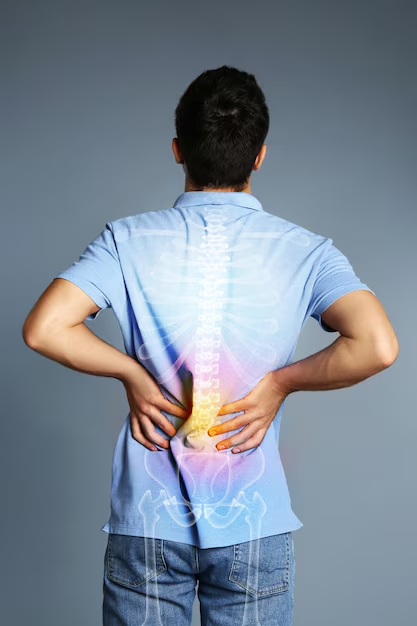
Illustration showing back pain with spinal overlay — typical symptom pattern when nerves are compressed.
Why It Hurts
When a nerve is compressed, pain can travel radiating down the arm or leg, and you may also feel numbness, tingling, or weakness depending on which nerve is affected.
When It Needs Prompt Evaluation
Worsening weakness, balance issues, coordination problems, or new bowel/bladder changes should be evaluated urgently.
Conditions Spinal Decompression Can Treat
Decompression may be recommended when imaging confirms nerve or spinal cord compression that correlates with your symptoms.
Stenosis
- Cervical stenosis
- Thoracic stenosis (selected cases)
- Lumbar stenosis
Pinched Nerves
- Herniated disc with nerve compression
- Foraminal stenosis
- Bone spurs irritating nerve roots
Other Indications
- Spinal cord compression (selected cases)
- Synovial cysts causing compression
- Recurrent compression after prior surgery
How Spinal Decompression Works
Spinal decompression removes or trims tissue such as bone spurs, thickened ligaments, or bulging discs that crowd the nerve pathways. By increasing space around the nerves or spinal cord, decompression relieves pressure and improves nerve function.
In some cases, decompression is performed as a stand-alone procedure. In others, it may be combined with spinal fusion if there is instability present.
What Your Surgeon Evaluates
- Which nerve roots are affected
- Where compression is occurring
- Whether the spine is stable
- Appropriate surgical technique and approach
Types of Decompression Procedures
The specific technique depends on where and how the nerves are compressed.
Laminotomy
Removes part of the lamina to create more space for nerves.
Laminectomy
Removes more of the lamina to increase space when stenosis is significant.
Foraminotomy
Widens the nerve exit tunnel (foramen) to relieve root compression.
Discectomy (Selected Cases)
Removes disc material compressing a nerve root.
Minimally Invasive Decompression
Uses smaller incisions and specialized instruments to reduce tissue disruption.
Who Is a Candidate?
Candidacy depends on your symptoms, imaging findings (often MRI), exam results, and how you’ve responded to conservative care.
You May Be a Candidate If
- Symptoms persist despite non-surgical care
- Imaging confirms compression matching your symptoms
- You have radiating pain, numbness or weakness
- Walking tolerance is limited by pain/heaviness
Decompression Alone May Not Be Enough If
- There is significant instability
- There is progressive deformity
- Multi-level structural issues exist
- Another approach is safer for your anatomy
Recovery
Recovery depends on the extent of decompression and whether additional procedures (like fusion) were done. Most patients begin walking early and gradually return to activity with guidance.
Early Recovery
- Walking is encouraged early
- Pain control and incision care
- Activity restrictions depend on approach
Rehab Phase
- Gradual increase in activity
- PT recommended in many cases
- Core strengthening focus
Return to Activity
- Timeline varies by procedure
- Goal is safe return to function
- Long-term plan helps prevent recurrence
Risks and Considerations
Decompression is commonly performed and can be effective, but all surgery carries risk. Your surgeon will review risks based on your diagnosis and plan.
General Surgical Risks
- Infection
- Bleeding
- Anesthesia complications
Spine-Specific Risks
- Nerve irritation or injury
- Spinal fluid leak (selected cases)
- Persistent symptoms or need for further surgery
FAQ
Is spinal decompression the same as spinal fusion?
No. Decompression relieves pressure. Fusion stabilizes. Some patients need decompression only; others need both.
How long does recovery take?
Many patients resume light activity within weeks, but full recovery depends on the extent of surgery.
Can decompression be minimally invasive?
Yes, in many cases minimally invasive approaches reduce tissue disruption and recovery time.